



Cyber Security

Japanese furniture giant Nitori says hackers stole 37.6M customer records
Nitori, a major Japanese furniture and home accessories retailer, discovered that an attacker accessed a system on its network and may have stolen 37.62 million customer records. [...]

F-Secure Identifies 26 Ways AI Can Harm Consumers, and Where to Stop Them
New AI Harms Taxonomy traces how harm moves through AI systems, from misleading chatbot answers to compromised autonomous agents, and identifies where defenses can intervene.

Checkmarx Appoints Kobi Sivilya as Chief Information Security Officer
Sivilya brings deep cybersecurity and technology leadership to Checkmarx as AI transforms software development.
AI & Automation

Anthropic launches new Claude Fable and Mythos 5.2 models
Anthropic is announcing two new models today: Claude Fable 5.2 and Claude Mythos 5.2, which it says are designed to take on "daunting" technical challenges. The company claims the new models show improvements in coding, reasoning, and vision, and can generate outputs faster than the 5.1 versions…

An AI model’s false tip to Philadelphia police reveals how digital agents can do as they’re told and still cause trouble
An expert on AI governance explains why these rare mistakes may soon be common, and with much higher stakes.

Is Claude Conscious? Inside Anthropic’s Quest to Instill Morality Into Its A.I. Models
Elizabeth Dias, our national religion correspondent, and Cade Metz, one of our technology reporters, discuss Anthropic’s approach for instilling morality into Claude — which has involved consultations with religious leaders, including ones at the Vatican — and why it’s raising questions.
Privacy & Identity
We’re Asking an Appeals Court to Require a Warrant for ALPR Searches
Why Fewer People Are Challenging Bad Patents
Presenting ‘Desire Lines: Encoding Queer Digital Futures’
EFF Submission to OHCHR Consultation on Child Rights and Safety in the Digital Environment
Enterprise Tech
SpaceXSI quietly flips Grok API text watermarking to off by default

New CNCF report: 75% of cloud-native developers ship code with AI. Jonathan Bryce explains why.

A $60 billion fintech hired a 14-year-old. Its CEO explains why.

Google claims its new AI software cuts inference latency by over 90% — but there’s a catch
Developers

Cloudflare Makes Basin Serverless Analytics Generally Available

Git security vulnerabilities announced
Google Finds that Technical Debt Can Derail Coding Agents Through “Agent Distraction”
Pinterest and Intel Take Open-Source Profiling to Internet Scale
Policy & Regulation
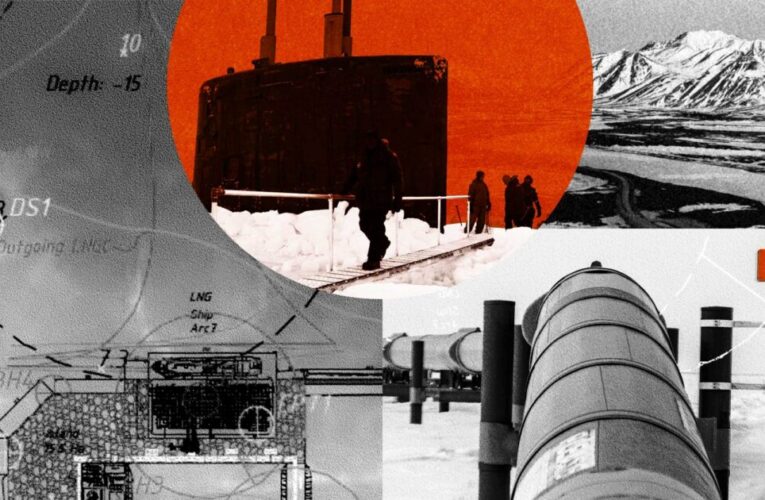
A Natural Gas Project Off Alaska’s Coast May Be a Russian Ploy for Intel on the Arctic

The Garbage Man: Bill Gates Has Earned Billions Investing in Climate-Polluting Landfills

Watch: Where Do Our Generic Drugs Come From? We Dug to Find Out.

Firm Linked to Trump’s Sons Got Nearly $40 Million in Federal Contracts to Screen for Ebola and Other Diseases
Markets & Economy

My friend feels trapped at her job but won’t do anything about it. Am I supposed to step in?

Retirees should be big beneficiaries of the midterms: ‘Democrats will hold every gavel that matters for aging and public policy’

Ignore the wild swings in chip stocks until they reach these ‘lines in the sand’

An overzealous Fed is quickly becoming the biggest risk to stocks in 2027



Tech Careers
Trump nominates another EEOC commissioner, potentially solidifying Republican control
AI leadership training tools are most effective when paired with managerial support
Holiday hiring looks different this year. Here’s why.
EEOC general counsel nominee dodges gender identity bias questions at hearing
Gadgets

I’ve waited a long time for the Boox Picco, and I’m not disappointed

Apple TV shares trailers for upcoming Snoopy and Fraggle Rock holiday specials

Today’s Android app deals and freebies: Undead Slayer, Level Come Again, Children of Morta, more

Apple has new Mac app coming to make running local AI models easy






Science

Antarctic water analysis reveals unexpected stability in dissolved organic carbon

Scientists discover new way to control magnetic waves for future quantum technologies

Classical–quantum light interactions could make complex quantum behavior easier to simulate

AI use is now universal in higher education. Why are universities failing to adapt?



Latest News in details
Antarctic water analysis reveals unexpected stability in dissolved organic carbon
Researchers have analyzed water samples collected during two expeditions aboard the research icebreaker Polarstern to investigate how life and changing conditions on the Antarctic continental shelf affect carbon carried into the deep ocean. Published… Read More about Antarctic water analysis reveals unexpected stability in dissolved organic carbon
Scientists discover new way to control magnetic waves for future quantum technologies
Researchers at the U.S. Department of Energy's (DOE) Ames National Laboratory have discovered a way to control the handedness of magnons, tiny magnetic waves that can carry information through materials. By changing the material's… Read More about Scientists discover new way to control magnetic waves for future quantum technologies
Classical–quantum light interactions could make complex quantum behavior easier to simulate
An international collaboration demonstrates that classical nonlinear dynamics can drive single- and two-photon states to thermalize, opening new avenues for simulating complex quantum many-body systems within accessible optical architectures. Read More about Classical–quantum light interactions could make complex quantum behavior easier to simulate
My friend feels trapped at her job but won’t do anything about it. Am I supposed to step in?
“She’s handed over the fate of her happiness to this job.” Read More about My friend feels trapped at her job but won’t do anything about it. Am I supposed to step in?
AI use is now universal in higher education. Why are universities failing to adapt?
Artificial intelligence use among university students is now near-universal in many countries. Yet, as of a year ago, fewer than one in five universities in a 90-country UNESCO survey had a formal AI policy. Read More about AI use is now universal in higher education. Why are universities failing to adapt?
Earth’s ‘core carbon’ may have come from the far reaches of the solar system
A new study suggests that most of Earth's carbon originated in the outer solar system and didn't arrive here until the late stages of planetary development. The study, led by researchers at Yale and… Read More about Earth’s ‘core carbon’ may have come from the far reaches of the solar system