NASA’s Swift telescope has burned up, months after a robot sent to save it failed
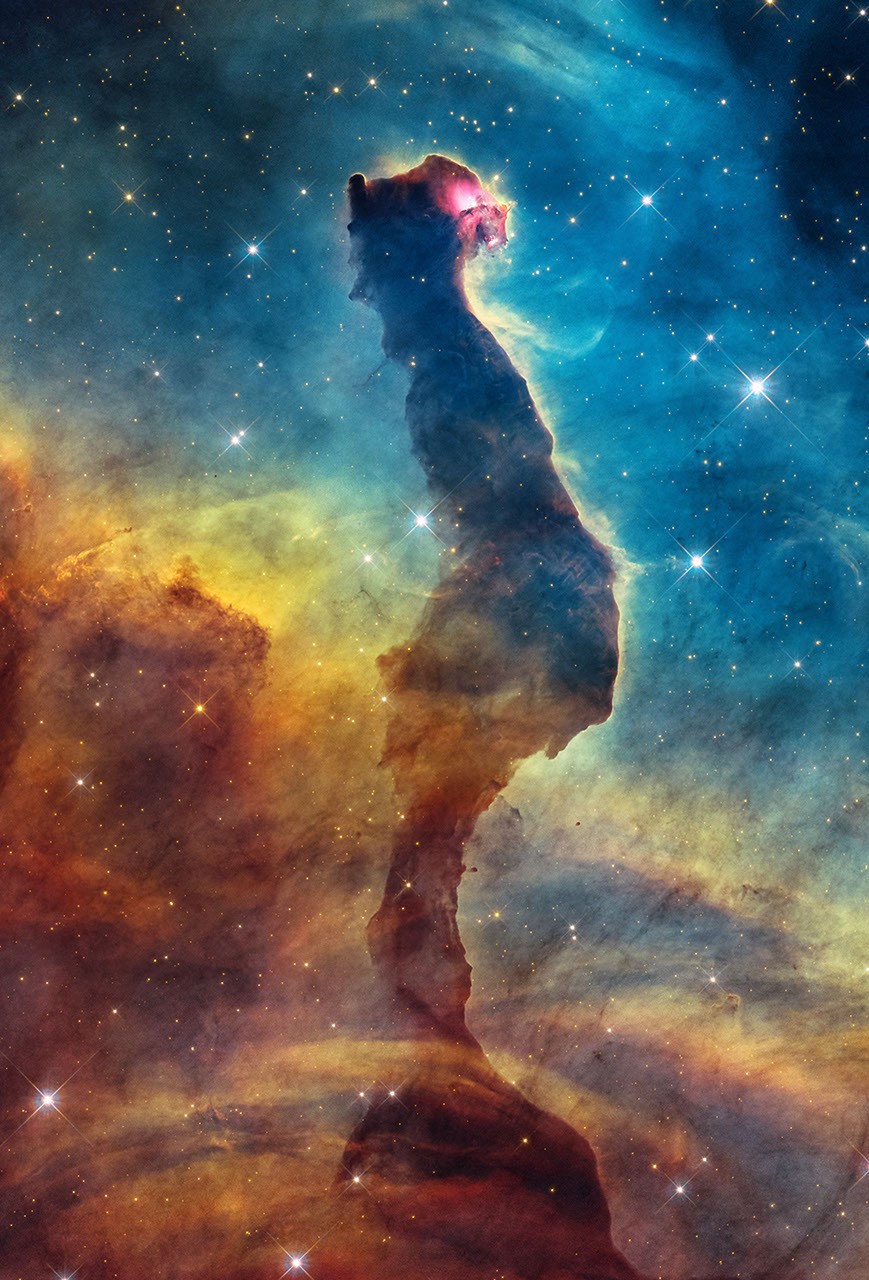
Image: NASA
ad slot · in-content video 16:9
Coverage
Wires & papers of record
- Like a spectral form rising out of a cold mist, NASA’s Hubble and James Webb Space Telescopes have captured a hauntingly dynamic star-forming scene. It lies within the vast Carina Nebula, a diffuse star-forming region located about 7,500 light-years away from Earth. The small, select area both…
- When companies began approaching NASA’s Langley Research Center, asking to be included in the In-Space Servicing, Assembly, and Manufacturing (ISAM) State of Play for access to competitive intelligence, the team knew they had crossed an inflection point. “We’ve had some unnamed companies ask if we…
- NASA issued a Request for Information Oct. 29 to learn more about industry capabilities for in-space servicing to support the agency’s Hubble Space Telescope.
- Intricate structures within the Cat’s Head Nebula are illuminated in this mid-infrared view from NASA’s James Webb Space Telescope released on Oct. 29, 2026. The distinctive “cat’s head” shape of the nebula was likely sculpted over time by the intense ultraviolet radiation and winds from massive…
- The space agency estimates that there is a one-in-2,100 chance that debris from the Neil Gehrels Swift Observatory could injure someone on the ground.
- Neil Gehrels Swift Observatory is expected to re-enter Earth’s atmosphere Wednesday, burning up in the process Nasa’s Neil Gehrels Swift Observatory, which has spent two decades studying the most powerful explosions in the cosmos, is expected to re-enter the Earth’s atmosphere on Wednesday,…
- NASA selected three companies on Wednesday to perform work to develop Ka-band space relay capability concepts that are compatible with current missions in space, ensuring service continuity for existing spacecraft without requiring modifications to their onboard systems. Through this work, NASA…
Coverage
- The space agency solicited ideas for reboosting Hubble four years ago, but they didn't go anywhere.
- Gravity is a cruel mistress, slowly dragging the famed telescope ever closer to its ultimate demise with every day. Hubble is in no immediate danger of burning up in the Earth's atmosphere, but its time will run out in the early to mid 2030s unless its orbit is boosted. So NASA is taking proposals…
- The 3,200-pound satellite is expected to reenter Earth’s atmosphere later this week with a wide reentry zone covering parts of Africa, Australia, Southeast Asia, and South America.
- The US Armed Forces says NASA's Swift observatory will re-enter Earth's atmosphere in the early hours of November 4.
- Almost 22 years after it was launched, NASA's Swift Observatory is now about to fall back to Earth on Wednesday after attempts to push it back into a higher orbit failed. NASA announced that the aging space telescope is anticipated to re-enter Earth's atmosphere at approximately 3:30AM ET (give or…
- The Swift Observatory allowed astronomers to study events that happen quickly in the universe, such as stars exploding.
- The Swift Observatory allowed astronomers to study events that happen quickly in the universe, such as stars exploding.
- NASA’s James Webb Space Telescope is wobbly—scientists have a fix that could reveal new alien worldsBy modeling the James Webb Space Telescope’s tiny movements, a new technique can reveal up to 15 times fainter alien worlds
- The observatory had spent decades studying powerful cosmic explosions and was the target of an unsuccessful rescue mission earlier this year
- If you bump a spacecraft in orbit, it may start tumbling uncontrollably. To save a falling satellite, the rescuer must be incredibly steady and precise.
- NASA's Swift orbital observatory fell back to Earth after running its mission for more than two decades. A rescue attempt to raise its sinking orbit had earlier failed.
More coverage
- NASA's Hubble and James Webb Space Telescopes have captured a hauntingly dynamic star-forming scene, like a spectral form rising out of a cold mist. It lies within the vast Carina Nebula, a diffuse star-forming region located about 7,500 light-years away from Earth. The small, select area both…
- One of NASA's premier space telescopes plunged to Earth on Wednesday, ending its 22-year investigation of the universe's biggest explosions.
- If you partitioned the entire Earth, from just below the surface to the top of the atmosphere, into 1-kilometer-square chunks, there would be billions of them. Now run each of those cells through a series of complex physics equations, and you can see how the entire Earth system interacts and…
- NASA's Neil Gehrels Swift Observatory took its last look at the sky on Oct. 20, 2026, while orbiting about 171 miles (275 kilometers) above Earth. NASA ended the telescope's mission three days later, because Swift had sunk so low that drag from the thin air there meant its telescopes couldn't hold…