M30’s Sparkling Stars
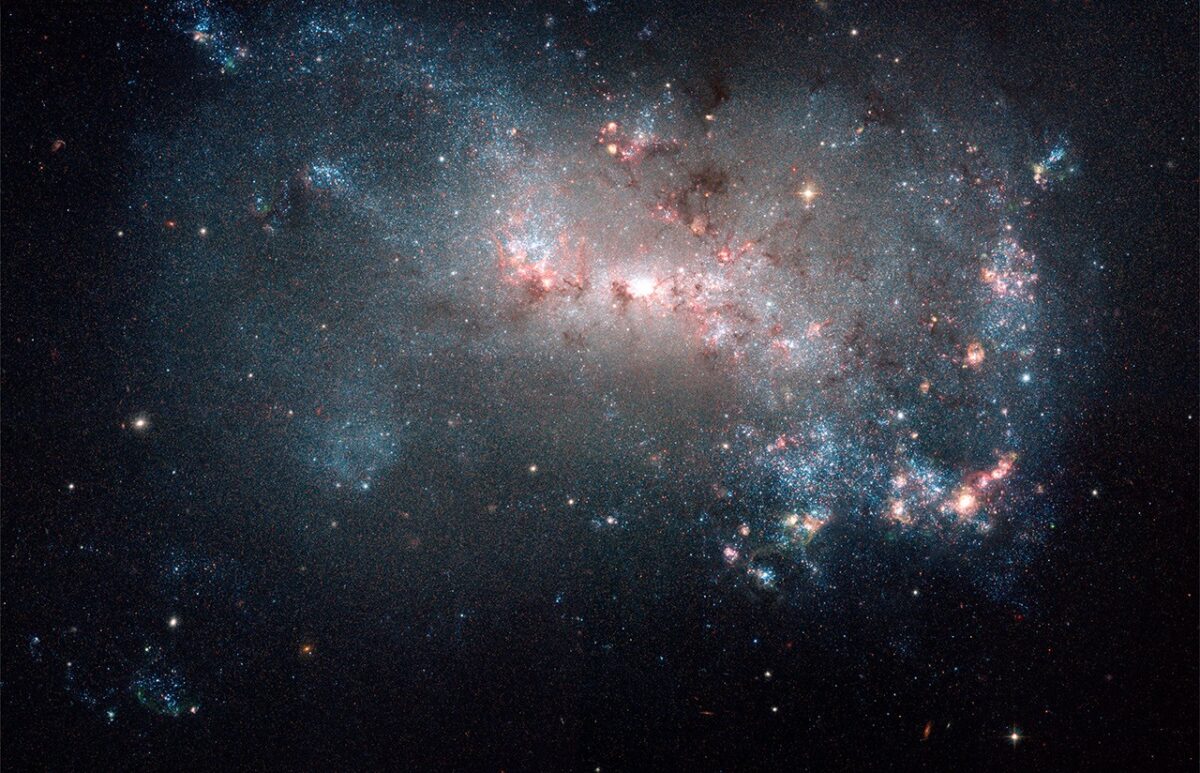
Image: NASA
ad slot · in-content video 16:9
Coverage
Wires & papers of record
- NASA’s Hubble studied 37 nearby dwarf galaxies and found that much of the oxygen they expected to see is missing.
- This photo released on Nov. 2, 2026, showcases NGC 4449, a dwarf irregular. Researchers using NASA’s Hubble Space Telescope studied 37 nearby dwarf galaxies — small galaxies containing a few thousand to hundreds of millions of stars — including NGC 4449 and found that much of the oxygen they…
- This Hubble image features the sparkling collection of stars named Messier 30 (M30), also called NGC 7099.
- This NASA/ESA Hubble Space Telescope image released Nov. 5, 2026, provides a lesson in galactic history. The sparkling collection of stars is named Messier 30 (M30) after the French astronomer, Charles Messier, who cataloged M30 and other diffuse objects that might be mistaken for comets in the…
More coverage
- Scientists examining data collected by NASA's Hubble Space Telescope have found that dozens of small galaxies contain far less oxygen than their stars are estimated to have produced. The researchers, including a Rutgers astrophysicist, studied 37 dwarf galaxies, which are much smaller than the…
- Astronomers using the James Webb Space Telescope (JWST) have confirmed a massive, dust-rich galaxy called Leviathan in the early universe. Seen when the universe was roughly 1.5 billion years old, the galaxy has its stars spread out rather than in a concentrated fashion. A paper, describing its…
- When astronomers looked at photos of the early universe taken by the James Webb Space Telescope, they found something odd: an overabundance of bright galaxies. Based on what they knew about the early universe, such galaxies should have been far less common in the few hundred million years…
- This NASA/ESA Hubble Space Telescope image provides a lesson in galactic history. The sparkling collection of stars is named Messier 30 (M30) after the French astronomer Charles Messier, who cataloged M30 and other diffuse objects that might be mistaken for comets in the early telescopes of…